
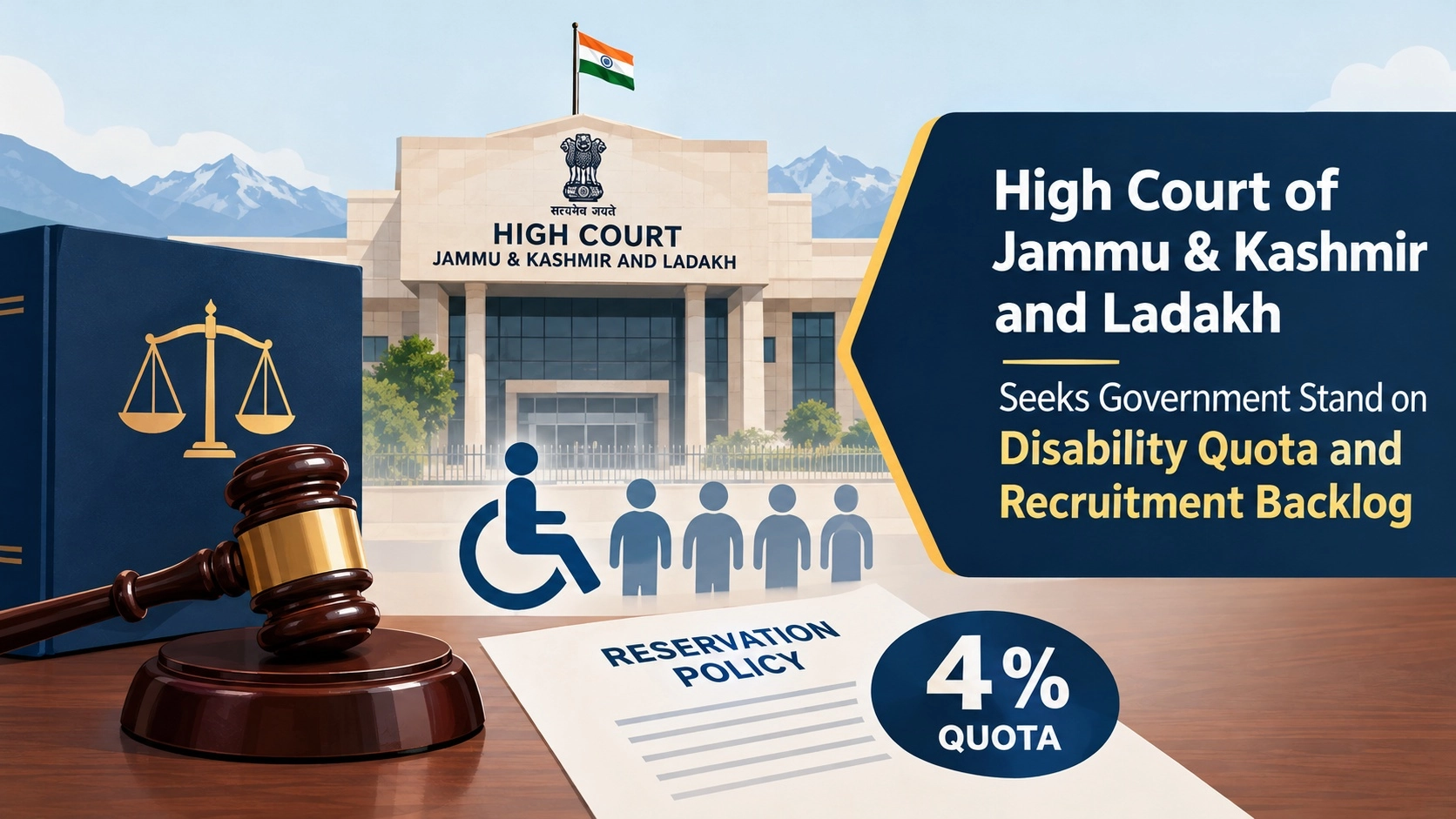
High Court of Jammu & Kashmir and Ladakh Seeks Government Stand on Disability Quota and Recruitment Backlog
JAMMU, Oct 8: The High Court of Jammu & Kashmir and Ladakh has recently directed the Union Territory Government to clarify its stance regarding the reservation policies for persons with benchmark disabilities (PwBD). This comes amid growing concerns over the identification of posts and the effective implementation of reservation laws that are intended to enhance employment opportunities for individuals with disabilities.
Background of the Case
The court's inquiry stems from ongoing challenges faced by PwBD in securing government employment. The reservation for PwBD is enshrined in various legal frameworks, including the Rights of Persons with Disabilities Act, 2016, which mandates that at least 4% of government jobs be reserved for individuals with disabilities. However, the implementation of this directive has raised several questions about its efficacy and reach.
Issues Under Scrutiny
The High Court's concerns revolve around multiple key issues:
- Identification of Posts: The government has been asked to provide clarity on how it identifies suitable positions for PwBD within various departments.
- Implementation of Reservation Policies: The court seeks to understand the mechanisms the government has in place to ensure that the reservation policy is effectively applied during recruitment processes.
- Backlog in Recruitment: There is significant concern regarding the backlog in filling positions reserved for PwBD, with many posts remaining unfilled despite the existing mandates.
Unanswered Questions
While the court's directive aims to shed light on these pressing issues, several unanswered questions linger:
- What criteria are being used for the identification of posts? The lack of transparency in the selection process has led to confusion and frustration among potential candidates.
- How is the government tracking compliance with the reservation policy? Without a robust monitoring framework, the effectiveness of the reservation system is difficult to assess.
- What are the reasons for the backlog, and what steps are being taken to address it? Understanding the root causes of this backlog is essential for ensuring that PwBD are not further marginalized in the recruitment process.
Potential Loopholes
Despite the robust framework intended to protect the rights of PwBD, several loopholes exist that could undermine the effectiveness of these laws:
- Ambiguity in Implementation: Vague definitions and criteria for identifying suitable posts for PwBD can lead to inconsistent application of the reservation policy.
- Lack of Awareness: Many employers may not be fully aware of their obligations under the law, leading to unintentional non-compliance.
- Limited Monitoring Mechanisms: Without stringent oversight and accountability measures, there is a risk that the reservation quotas will not be met.
Future Litigation Risks
The court's inquiry may pave the way for future litigation on several fronts:
- Enforcement of Reservation Policies: Should the government fail to provide satisfactory answers or demonstrate progress, affected individuals may seek judicial intervention to enforce their rights.
- Claims for Unfilled Positions: PwBD may pursue claims for positions that have remained unfilled, arguing that the government has violated their rights under the reservation scheme.
- Challenge to Recruitment Processes: Any perceived inadequacies in the recruitment processes or failure to comply with legal mandates could lead to challenges in court, as candidates seek redress for discrimination.
Conclusion
As the High Court awaits the Union Territory Government's response, the spotlight remains on the implementation of disability rights in employment—an area that demands urgent attention and reform.
The outcome of this inquiry could significantly impact the lives of many individuals with disabilities, shaping the future landscape of employment opportunities in Jammu and Kashmir. It serves as a reminder that while laws exist to protect the rights of marginalized groups, the real challenge lies in their effective implementation and enforcement. The court's scrutiny may not only bring about necessary changes but also instill a sense of accountability within the government, ensuring that the rights of PwBD are upheld and that they receive equitable opportunities in the workforce.
No comments yet. Be the first to share your thoughts!