
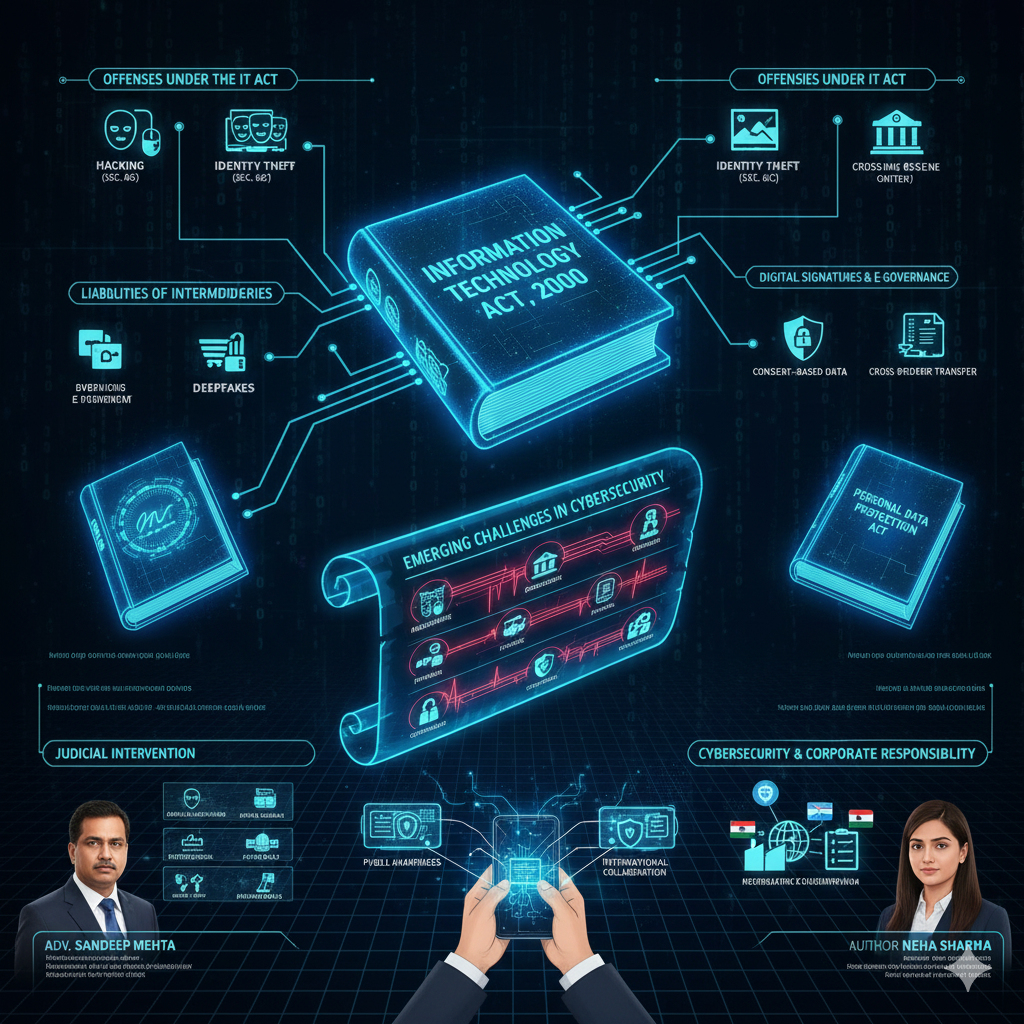
The digital revolution has transformed the way India communicates, trades, and accesses services. However, increased reliance on technology has also exposed individuals, organizations, and the government to cyber threats. In response, India has developed a comprehensive legal framework addressing cybersecurity, data protection, and cybercrime. Understanding these laws is essential for both legal professionals and citizens in the digital era.
Historical Background of Cyber Law in India
India recognized the need for cyber regulation in the late 1990s with the growing use of computers and the internet. The Information Technology Act, 2000 (IT Act) was enacted as the first comprehensive legislation to address cybercrime, electronic commerce, and digital signatures. The IT Act provides a legal framework for:
- Electronic governance
- Digital contracts and signatures
- Cybercrime offenses such as hacking, phishing, and identity theft
According to Adv. Sandeep Mehta, the IT Act was a milestone, bridging the gap between technology and law, but evolving cyber threats necessitated continuous amendments and supplementary regulations.
Key Provisions of the IT Act, 2000
The IT Act addresses both civil and criminal liabilities for online activities:
- Offenses under the IT Act:
- Hacking and unauthorized access (Section 66)
- Identity theft and impersonation (Section 66C)
- Cyberstalking and harassment (Section 66A – struck down but replaced with relevant IPC provisions)
- Publishing obscene content online (Section 67)
- Liabilities of Intermediaries:
- Platforms like social media networks, e-commerce portals, and ISPs have limited liability if they comply with due diligence guidelines.
- Digital Signatures and E-Governance:
- Legally recognizes electronic signatures for contracts, filings, and official documents.
- Adjudicatory Authorities and Penalties:
- Provides for compensation, fines, and prosecution in cases of cyber offenses.
Emerging Challenges in Cybersecurity
As technology evolves, India faces new challenges that extend beyond the IT Act:
- Ransomware and malware attacks on corporate networks
- Data breaches exposing sensitive personal and financial information
- Phishing and online frauds targeting individuals and businesses
- Cyberterrorism threatening national security
- Deepfake technology and online defamation
Author Neha Sharma emphasizes that legal frameworks must remain dynamic to address technological innovations while ensuring privacy and security.
The Role of the Personal Data Protection Bill
India is on the verge of strengthening privacy laws through the Personal Data Protection Act (PDPA), inspired by the GDPR framework in Europe. Key objectives of the PDPA include:
- Ensuring consent for data collection
- Regulating cross-border transfer of personal data
- Strengthening penalties for data misuse
- Creating a Data Protection Authority to monitor compliance
Adv. Sandeep Mehta notes that the PDPA complements the IT Act, filling gaps in individual data privacy and enhancing cybersecurity governance.
Judicial Intervention and Case Law
The Indian judiciary has played a significant role in shaping cybersecurity law. Landmark cases include:
- Shreya Singhal v. Union of India (2015) – Struck down Section 66A of the IT Act, reinforcing freedom of speech online.
- Justice K.S. Puttaswamy v. Union of India (2017) – Recognized privacy as a fundamental right, impacting data protection regulations.
- Avnish Bajaj v. State (2008) – Held intermediaries liable for illegal content on their platforms.
Judicial activism ensures that cyber laws remain effective while respecting constitutional rights.
Cybersecurity and Corporate Responsibility
Organizations must comply with cybersecurity standards to prevent legal and reputational damage. Key compliance measures include:
- Implementing robust IT security protocols
- Regular audits and penetration testing
- Reporting data breaches to authorities promptly
- Training employees on cyber hygiene
Author Neha Sharma highlights that corporations failing to adhere to these standards may face heavy penalties, litigation, and loss of consumer trust.
Public Awareness and Citizen Responsibility
Legal frameworks alone cannot prevent cybercrime. Public awareness and responsible digital behavior are crucial. Citizens should:
- Use strong passwords and two-factor authentication
- Avoid sharing sensitive information online
- Verify sources before clicking links
- Report cyber incidents to authorities
Adv. Sandeep Mehta points out that informed citizens are the first line of defense against cyber threats.
International Collaboration
Cybersecurity is a global concern. India participates in international collaborations such as:
- Budapest Convention on Cybercrime
- Bilateral agreements with countries for cyber intelligence sharing
- International forums on data protection and cybersecurity standards
Such cooperation is essential to combat cybercrime that transcends borders.
Future Directions
The field of cybersecurity law in India is evolving rapidly. Future areas of focus include:
- Regulating Artificial Intelligence and automated decision systems
- Strengthening cybersecurity for critical infrastructure
- Developing robust cyber insurance frameworks
- Updating legal provisions for emerging technologies like blockchain and IoT
Author Neha Sharma concludes that proactive legislation, judicial vigilance, and citizen engagement are key to addressing future cyber threats.
Conclusion
Cybersecurity law in India serves as a protective framework for individuals, organizations, and the state. With the IT Act, 2000, ongoing amendments, and the forthcoming Personal Data Protection Act, India is steadily strengthening its legal architecture to meet modern challenges.
Advocate Sandeep Mehta emphasizes that legal compliance, corporate responsibility, and technological safeguards must go hand-in-hand to mitigate risks. Author Neha Sharma concludes that as India becomes increasingly digital, a robust legal framework combined with public awareness will ensure that citizens can safely navigate the online world while protecting their fundamental rights.